
Flight Testing in Gore
Flight Structures Design Delegate and Senior Engineer Murray McGregor was invited to be involved with the Transport Accident Commission investigation into the Fox Glacier accident. Below is the article from the Gore Ensign on Wednesday November 5th.
Flight Structures Design Delegate and Senior Engineer Murray McGregor was invited to be involved with the Transport Accident Commission investigation into the Fox Glacier accident. Below is the article from the Gore Ensign on Wednesday November 5th.
Phoenix Aviation at Charlton is the base for a partial review of evidence relating to the 2010 crash of a Walter Fletcher aeroplane at Fox Glacier. MARGARET PHILLIPS reports.
Phoenix Aviation, at Charlton airport, is being used by the Transport Accident Investigation Commission to carry out a partial review of evidence that led to its findings regarding the 2010 crash of a Walter Fletcher aeroplane at the Fox Glacier aerodrome.
On September 4, 2010, the pilot of the plane, with eight parachutists on board, lost control during take›off from Fox Glacier aerodrome. The aeroplane crashed in a paddock adjacent to the runway, killing all nine occupants.
Commission deputy chief investigator Peter Williams, of Wellington, said the partial review of evidence was carried out at Phoenix Aviation earlier this week as the southern venue was the most suitable. Phoenix Aviation had a Walter Fletcher aircraft. The review was prompted by questions raised at the inquest, Mr Williams said. ‘‘It’s part of a number of aspects of inquiry that we’re reviewing,’’ he said. The review had been carried out this year.
‘‘There’s a lot of things to be looked at.’’
Flight Structures consultant Murray McGregor, of Hamilton, also travelled to Gore to help with the review. Mr McGregor said the object of the visit to Phoenix Aviation was to generate basic data on the flight characteristics of the Walter Fletcher. The Walter Fletcher was predominantly used as a topdressing plane, he said. The Transport Accident Investigation Commission’s findings on the accident said there were no technical defects identified that might have contributed to the accident and the aeroplane was considered controllable during the take-off roll, with the engine able to deliver power during the short flight. ‘‘The aeroplane’s centre of gravity was at least 0.122m rear of the maximum permissible limit, which created a tendency for the nose to pitch up,’’ the findings stated.
‘‘The most likely reason for the crash was the aeroplane being excessively out of balance. In addition, the aeroplane probably became airborne early and at too low an airspeed to prevent uncontrollable nose›up pitch.’’ The aeroplane reached a pitch angle that would have made it highly improbable for the unrestrained parachutists to prevent themselves sliding back towards the tail, and any shift in weight rearward would have made the aeroplane more unstable.
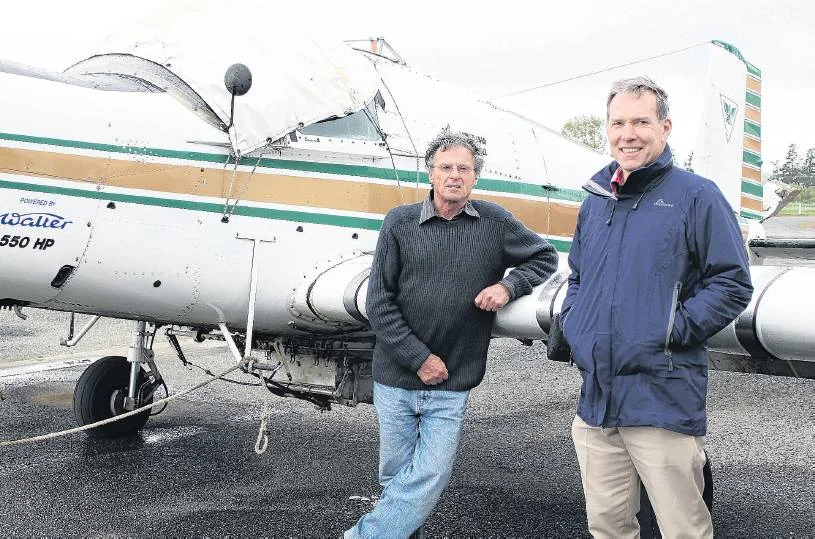
Photograph : Flight Structures consultant Murray McGregor (left), of Hamilton, and Transport Accident Investigation Commission deputy chief investigator Peter Williams, of Wellington, wait for a break in the weather at Charlton airport during their review of evidence relating to the 2010 crash of a Walter Fletcher aeroplane at Fox Glacier. PHOTO: MARGARET PHILLIPS

STC GAINED FOR MODIFICATION OF 750XL FLAP SYSTEM.
Farmers Air, one of New Zealand’s leading agricultural aircraft operators, came to Flight Structures to design a new flap system for their PAL 750XL aircraft.
Farmers Air, one of New Zealand’s leading agricultural aircraft operators, came to Flight Structures to design a new flap system for their PAL 750XL aircraft. The standard flap actuation system is electrically actuated contained under the cabin floor, which is practical for utility aircraft. However this was proving to be mechanically unreliable due to the high cycle nature of agricultural operations and maintenance intensive.
Flight Structures redesigned the flap system to be located above the cabin floor and hydraulically actuated. The flap system and hydraulic components were sourced locally in Hamilton.
Flight Structures was responsible for the design and certification of the hydraulic flap system. We worked closely with Farmers Air Personnel for design advice and Aeromotive who were responsible for embodiment.
The result of this project has been a significant improvement in aircraft reliability and reduced maintenance costs.

MEDICAL REFIT OF PSRT WESTPAC AIR AMBULANCE
In December 2013 the Prime Minister John Key launched the new Waikato Westpac Air Ambulance (BK117 B-2) at Hamilton International Airport. Flight Structures played an important role in getting this aircraft in the air.
In December 2013 the Prime Minister John Key launched the new Waikato Westpac Air Ambulance (BK117 B-2) at Hamilton International Airport. Flight Structures played an important role in getting this aircraft in the air.
The Westpac Air Ambulance is used for both medical transfer and search and rescue operations and quick change of role equipment is vital when responding to various emergency scenarios.
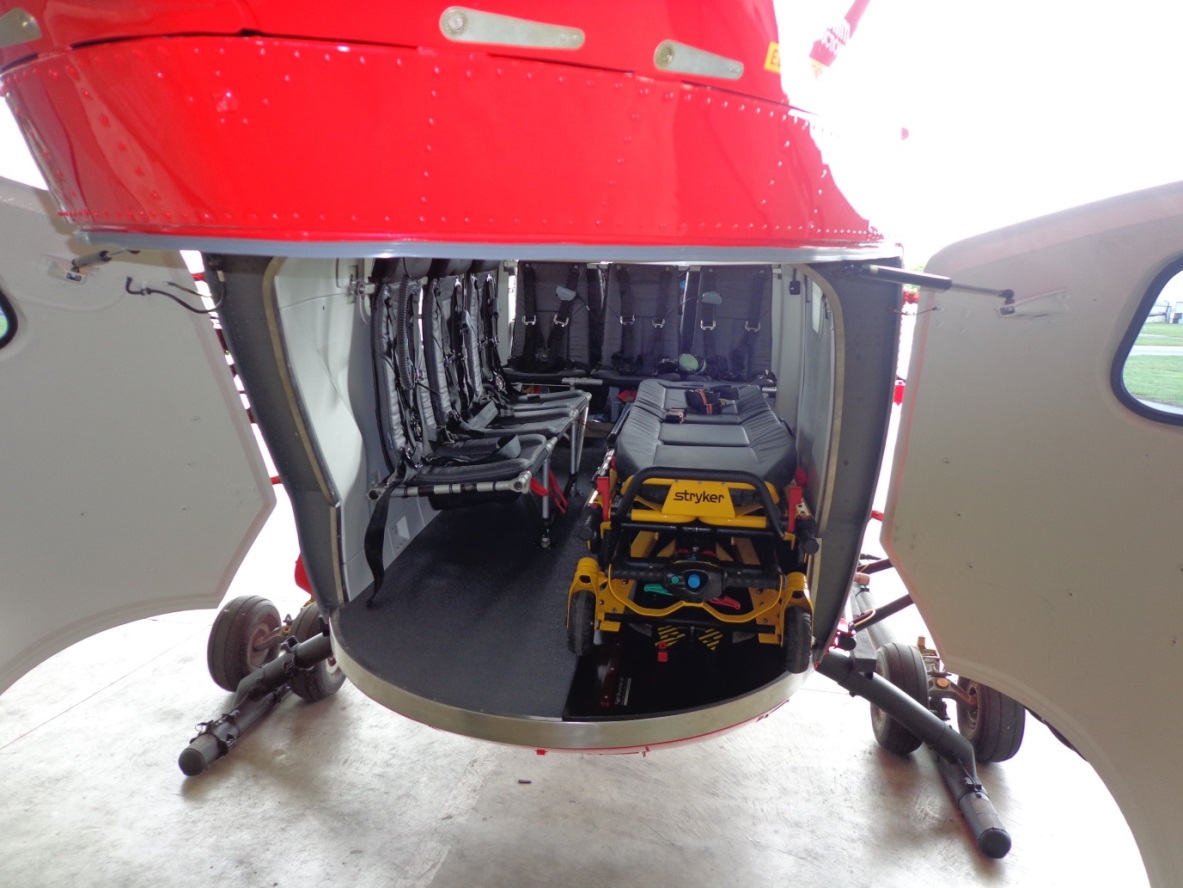
Philips Search and Rescue Trust, (the operator) approached Flight Structures to develop a restraint system to accommodate both the Stryker and Ferno Stretchers. The design is unique because it allows a quick (less than one minute) changeover between systems.
Flight Structures was successful in gaining approval of the stretcher restraint design by issue of a CAA STC which may be incorporated on any BK117 helicopter operating in New Zealand or Australia.
Several other modifications were involved in the refit of the aircraft including:
Stretcher interface for carriage of Neo-Natal Incubators;
Skid mounted “Snow Shoes” to allow landing on soft terrain;
Weather Radar installation;
A/C electrical power supply;
LED spotlight for night time stretcher loading.
Flight Structures partnered with TechAir (avionics suite) and Hamilton Aero Maintenance (embodiment) to ensure that the BK117 met the operational requirements of the PSRT.
This project took approximately six months and has had positive feedback from both the Trust and the medical crew.
For more information about the Philips Search and Rescue Trust please click here.

FITOUT FOR NEST SIKORSKY
In 2012 Northland Emergency Services Trust refitted ZK-IKM, one of their three Sikorsky helicopters. The fitout involved installation of two aft facing crew seats designed and manufactured by Flight Structures. The seats have a four point harness.
In 2012 Northland Emergency Services Trust refitted ZK-IKM, one of their three Sikorsky helicopters. The fitout involved installation of two aft facing crew seats designed and manufactured by Flight Structures. The seats have a four point harness.
The new seats allow the crew to rest as much as possible during long night flights, reducing fatigue.
Northland Emergency Services Trust are based in Whangarei, and provide a rescue service to Northland and beyond.
Here is a link to their website.

NEW CREW SEATS FOR PHILIPS SEARCH AND RESCUE TRUST AS350 FLEET
Flight Structures have successfully developed a short rear crew seat for Philips Search and Rescue Trust fleet of AS350 'Squirrel' helicopters.
Flight Structures have successfully developed a short rear crew seat for Philips Search and Rescue Trust fleet of AS350 'Squirrel' helicopters. The seat which folds up out of the way, uses existing harnesses, and can be placed at either side of the cabin. This allows a stretcher to fit in the helicopter when required. The seat was designed and manufactured by Flight Structures.
Philips Search and Rescue Trust operate 5 helicopters in the North Island, providing rescue services throughout the Waikato, Bay of Plenty and Central North Island. Here is a link to their website.

JETSTREAM 31 CONVERSION TO AERO MEDICAL USE
Recently Flight Structures Ltd approved a major design change for Wellington's Life Flight Trust, where a Jetstream 31 was converted for aero-medical use.
Recently Flight Structures Ltd approved a major design change for Wellington's Life Flight Trust, where a Jetstream 31 was converted for aero-medical use. This project which was completed in under two months, involved refitting the aircraft with new Flight Structures seats, designing and approving stretcher bases and certification of the back up battery system. The fit out was completed by Vincent Aviation.
You can also refer to the May/June 2012 issue of Vector Magazine, titled "Design Delegation Holders" where the CAA explain how delegation works, referencing this project.

EASA STC AWARDED TO AIRWORK BK117-850D-2
We are proud to announce that EASA has awarded Airwork (NZ) Ltd STC approval for the BK117-850D2. The remarkable new engine upgrade that is proving hugely popular with operators throughout Australia, New Zealand, and surrounding countries will now be available for use in European countries, and countries which recognise EASA STC approval.
We are proud to announce that EASA has awarded Airwork (NZ) Ltd STC approval for the BK117-850D2. The remarkable new engine upgrade that is proving hugely popular with operators throughout Australia, New Zealand, and surrounding countries will now be available for use in European countries, and countries which recognise EASA STC approval.
The award concludes a thorough certification program, run by Flight Structures Ltd in conjunction with Airwork (NZ), Honeywell, and AeroDAC.
Flight Structures Engineer Henry Dumbleton remarks "The project has been punctuated by some really spectacular moments. We 've flown to some amazing places and worked with very talented people. The project has really come together and we're ecstatic with the result for our client".
The project is technically very satisfying from an engineering perspective, with the development of a specific BK117 performance modeling program and culminating in dramatic demonstrations of the helicopters new capabilities.
Flight Structures has enjoyed working with EASA on this project and looks forward to bringing more New Zealand and Australian aeronautical products into the international market

FLIGHT TESTING IN PAPUA NEW GUINEA
Flight Structures Ltd Engineers Jon Kerr and Henry Dumbleton have just returned from a successful flight testing programme in the highlands of Papua New Guinea. The objective was to test Airwork (NZ) Ltd’s BK117-850-D2 in hot and high conditions together with a visiting EASA flight test team. The programme was led by Flight Structures and involved a large international team, including staff from Airwork (NZ) Ltd, Helilink and Heli Niugini. The successful completion of the testing is a major milestone and paves the way for EASA certification of Airwork (NZ) Ltd’s powerful new BK117.

FALCO 3000XL AGRICULTURAL AIRCRAFT SET TO IMPROVE PRODUCTIVITY, CREW COMFORT, AND SAFETY.
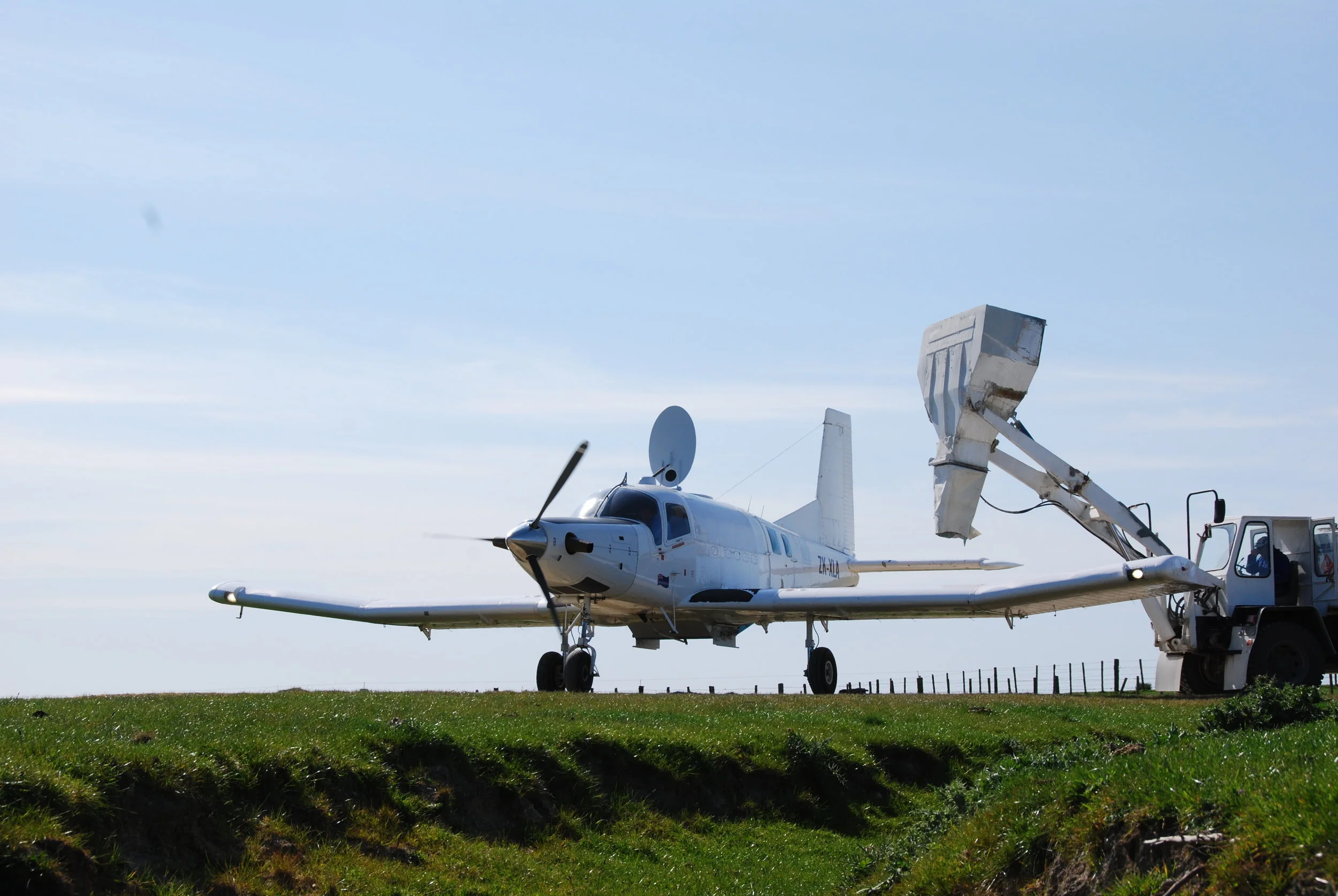
Flight Structures, working with Farmers Air Ltd, have designed and approved a major modification to the PAL 750XL airframe, christened the FALCO 3000XL
Flight Structures, working with Farmers Air Ltd, have designed and approved a major modification to the PAL 750XL airframe, christened the FALCO 3000XL. The main design features are a lightweight 3000 litre carbon fibre hopper, 2000 kg payload and a new streamlined light weight cowling with improved air filtration.
The FALCO 3000XL builds upon the proven ability of the Pacific Aerospace aircraft, including the Fletcher, Cresco, and 750XL to offer a replacement aircraft for those no longer in production. The 750XL cockpit has been further improved and offers excellent leg room, a quieter environment and better ergonomics for a less fatigued pilot.
The aircraft also features a large hopper lid to minimise spillage, Agricultural GPS and GPS Tracking equipment, and a substantially revised fuselage structure which integrates the hopper as load bearing structure.
The Supplementary Type Certificate for the Farmers Air Ag Conversion of the 750 XL has been issued. Flight Structures completed all the design, project management, flight testing and CAA requirements, working closely with Farmers Air pilots and engineers. Partnering companies were Aeromotive, Pacific Aerospace Limited, Av Parts and Composites International.
The 750XL was modified by removing unnecessary weight, installing a light weight high strength carbon fibre hopper, and incorporating a barrier air filter into the streamlined cowl. Farmers Air pilots were heavily involved in the design and their input influenced modifications to increase the rudder power for improved cross wind performance and reducing the elevator forces to reduce pilot fatigue. The aircraft has a 2200 litre hopper capacity with a 2200kg payload. Crunch the numbers and you will find the Falco3000 is the least expensive platform to spread fertilizer by air.

AIRWORK (NZ)’S BK117-850D2 TAKES TO THE SKIES OVER AUSTRALIA AND NEW ZEALAND
Airwork (NZ)’s BK117-850D2 has taken to the skies over Australia and New Zealand, with approval in Europe and America set to follow.
Airwork (NZ)’s BK117-850D2 has taken to the skies over Australia and New Zealand, with approval in Europe and America set to follow.
Flight Structures has led a highly successful certification program for the BK-117B-2, which concluded May 2010 with the issue of a NZCAA Supplementary Type Certificate. Flight Structures has worked closely with Airwork (NZ) and Honeywell on the development of the BK117-850D2, which incorporates the latest technology 850 hp engines from Honeywell, with spectacular performance results that have exceeded expectations.
One of the most challenging aspects of the program was the determination and validation of improved performance. For this Flight Structures Ltd designed and developed a computer based performance model to map the engine installation, rotor performance, and airframe aerodynamics to predict all aspects of the performance envelope.
Flight Structures flight test engineers validated the calculated performance over several month of testing, culminating in flawless demonstrations of Category A vertical take-off simulated engine failures at maximum certified weight on a hot summers day.
The successful management of this project has shown that Flight Structures has the knowledge, experience, and capacity to deal with large-scale international projects, and deliver quality results on time with excellent value for money.
Flight Structures continues to work with Airwork (NZ) on EASA and FAA approval of the BK117-850D2 expected late 2010/early 2011.